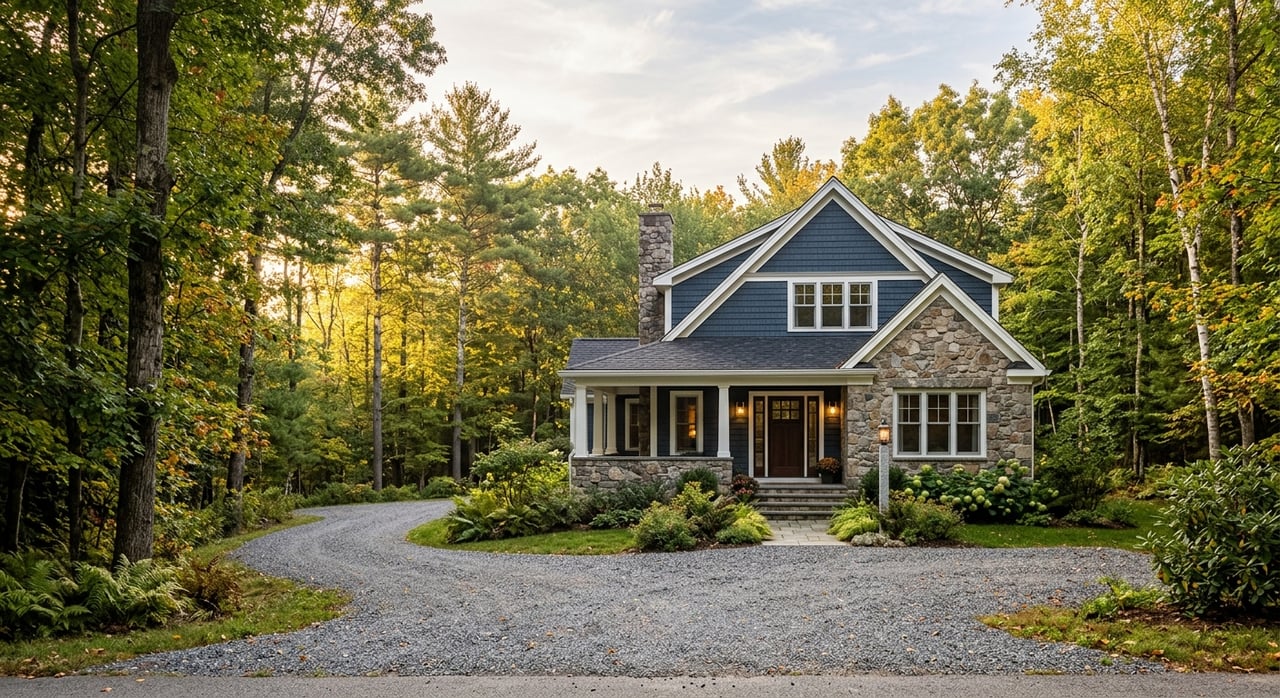
Moving From MA to Bow NH: What Buyers Should Know
June 18, 2026
June 18, 2026
Thinking about leaving Massachusetts for more space, a different tax picture, and a quieter home base? If Bow, New Hampshire is on your shortlist, you are not alone. Bow appeals to many buyers who want a rural feel with practical access to Concord, Manchester, and major highways. In this guide, you will learn what daily life, housing, taxes, and logistics can look like so you can decide whether Bow fits your next chapter. Let’s dive in.
Bow offers a mix that many relocating buyers find hard to ignore. It is a small town in Merrimack County with an estimated population of 8,415 as of July 2025, and it has a high owner-occupied housing rate of 87.5%. That kind of stability often appeals if you are looking for a place where homeownership is the norm and turnover tends to be limited.
The town also describes its planning approach as balancing preservation and progress while maintaining a rural feel. If you are coming from a denser part of Massachusetts, that can translate into a different pace of life, more space around you, and a stronger sense of separation between home and work.
For many households, taxes are part of the conversation too. New Hampshire has no general sales tax and no tax on W-2 wages, and the state’s interest-and-dividends tax was repealed for taxable periods beginning after December 31, 2024. By comparison, Massachusetts has a 6.25% sales tax and a 5.00% wage tax, with an added surtax above the annual threshold for high earners.
Bow sits at the junction of Route 93 and Route 89, which gives it a very highway-oriented location profile. According to the town, Bow is less than 5 miles from downtown Concord, about 15 minutes from Manchester, and roughly 20 miles from Manchester-Boston Regional Airport. The town also notes that Boston is just over an hour to the south.
That said, commute time on paper is only part of the story. The Census Bureau’s American Community Survey estimates Bow’s mean travel time to work at 27.0 minutes, but your real experience will depend on where in Bow you live and exactly when you need to be on the road.
Bow’s transportation information emphasizes roads, freight, and rail corridors more than transit-based daily living. In practical terms, Bow is generally easiest to use as a driving community. If you work in Concord, Manchester, or commute farther south, it is smart to test the route during the times you would actually travel.
A move to Bow is often about changing your balance, not giving up convenience. You may gain more space and a quieter setting, but you will want to be realistic about drive times, winter travel, and how often you need quick access to services or work hubs.
For many buyers, the right question is not simply, “How far is Bow?” Instead, ask, “How will Bow feel on a Tuesday morning, a Friday afternoon, and a snowy January day?” That is usually where the best relocation decisions get made.
If you are moving from Massachusetts, one of the biggest adjustments may be Bow’s housing mix. Bow’s 2024 revaluation materials show 3,496 parcels in town, including 2,639 single-family parcels, 178 condominiums, and 240 commercial or industrial parcels. That points to a market led heavily by detached homes, with a much smaller condo segment.
The same revaluation analysis reviewed 67 single-family sales and 6 condo sales from the 2023 to 2024 period. Median sale prices were $600,000 for single-family homes and $550,000 for condominiums. The town also stated that the revaluation was meant to bring assessments to 100% of market value as of April 1, 2024.
Census data supports the idea of a stable, owner-focused market. Bow’s median owner-occupied home value is $506,500, and 92.7% of residents lived in the same house one year ago. When turnover is limited, buyers often need to be prepared for fewer choices at any given time.
If Bow is your target, it helps to stay flexible and focused. You may not see a large volume of listings compared with bigger markets, and the homes available may skew toward single-family properties on larger lots. If you are open to different home styles or timelines, that flexibility can make your search smoother.
This is also a town where property details matter. If you are considering acreage, an older home, or a property with unique features, it is worth looking closely at layout, maintenance history, and how the home fits your long-term lifestyle goals.
Many Massachusetts buyers look north because of New Hampshire’s tax structure, but it is important to compare the full picture. Bow’s current property tax rate is $20.05 per $1,000 of assessed value for tax year 2025, and property taxes are billed semiannually.
That does not automatically make Bow more or less affordable than your current town. What matters is how the property tax bill, purchase price, commuting costs, and day-to-day spending fit together for your household. New Hampshire’s lack of general sales tax and wage tax may create savings, but you will still want to review the numbers property by property.
Housing-related monthly costs are another part of the equation. Census data shows Bow’s median selected monthly owner cost with a mortgage is $3,039, while median gross rent is $1,539. Those figures can help you frame your budget as you compare staying in Massachusetts versus making a move.
One of the easiest mistakes in a cross-state move is assuming every home functions the same way. In Bow, utility setup can vary by property. The town’s municipal water system serves the commercial and industrial zone on specific roads, and sewer hookups are handled through town offices.
For buyers, that means you should verify utility details early in the process. A home’s water and sewer setup can affect both your monthly costs and your day-to-day expectations, especially if you are used to a different utility pattern in Massachusetts.
Before you move forward on a property, it helps to confirm:
These are not small details. They shape how a home lives once move-in day is behind you.
For buyers planning around school continuity, Bow offers a full local K-12 path through SAU 67. The town includes Bow Elementary School for grades K through 4, Bow Memorial School for grades 5 through 8, and Bow High School for grades 9 through 12, along with special education preschool.
That structure can be helpful if you are relocating with children and want a clear school path within town. It is one of the practical lifestyle anchors that often matters during a move.
Beyond schools, Bow has more community infrastructure than some buyers expect from a town of its size. The Baker Free Library and Bow Parks & Recreation support a wide range of day-to-day activities, and the town highlights ponds, parks, trails, and more than 1,000 acres of town forest.
The area’s recreation options also extend beyond Bow itself. The town points residents to the Hopkinton-Everett Multi-Use Trail System in nearby Dunbarton, which adds to the region’s outdoor access.
Bow can make a lot of sense if you want a quieter home base without feeling disconnected from major routes. Its combination of interstate access, a rural-feel planning approach, a large single-family housing base, and strong local recreation gives it a distinct identity.
You may find Bow especially appealing if you want:
At the same time, Bow may require tradeoffs that are worth thinking through carefully. Limited turnover can mean fewer available homes, and your daily routine may depend heavily on the car. The best move is the one that matches not just your budget, but also how you actually want to live.
If you are serious about moving to Bow from Massachusetts, a scouting trip should go beyond a quick drive-through. The most useful visits usually include one daytime drive, one rush-hour drive, and if possible, one look during winter weather conditions.
You will also want to compare specific neighborhoods or areas of town based on commute flow, lot style, and access to the places you use most. Because Bow is a lifestyle decision as much as a location decision, in-person context matters.
A smart scouting checklist includes:
When you slow the process down and test daily life, the decision usually becomes much clearer.
If you are weighing a move to Bow, the biggest advantage is clarity. You do not need to guess how the town might fit your life when you can compare commute, housing, taxes, and property details in a thoughtful way. If you want local guidance as you explore Bow and nearby New Hampshire towns, Allison Driscoll can help you build a plan around your lifestyle, priorities, and long-term goals.
Stay up to date on the latest real estate trends.




Our team offers personalized support for buyers and sellers who value lifestyle, community, and connection. Wherever you're headed, we’ll help you find the place that feels just right.