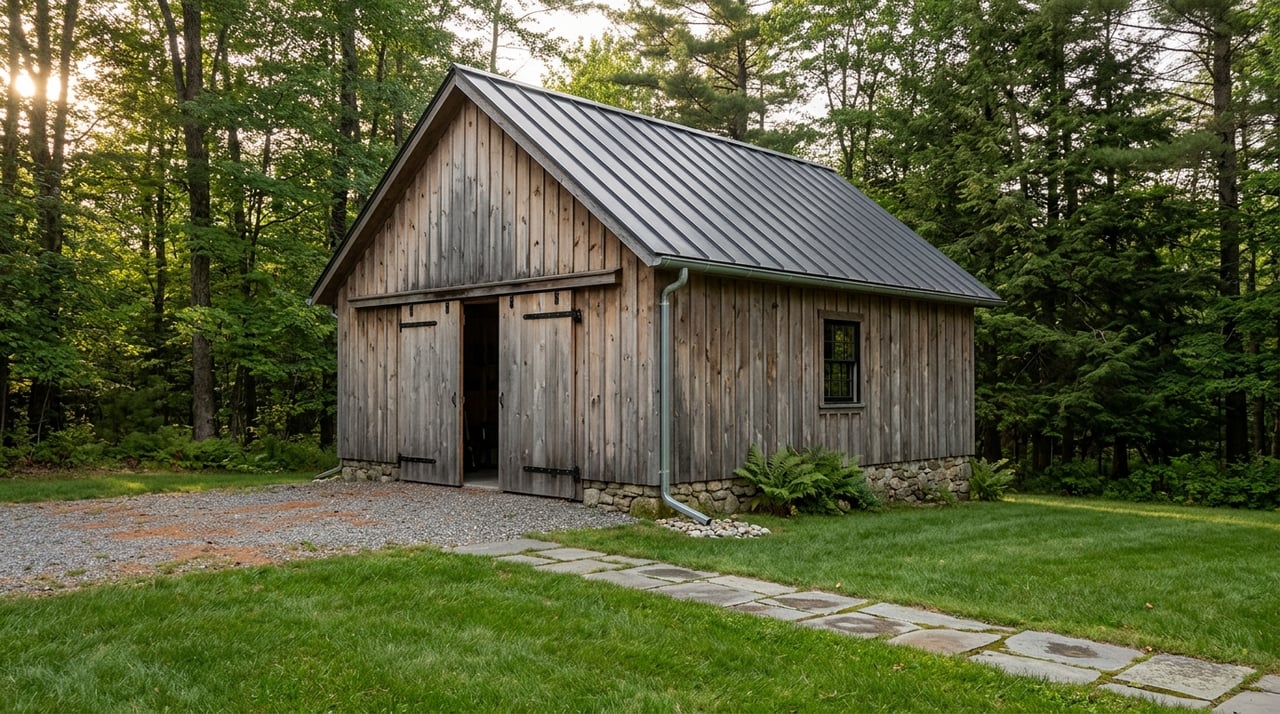
Guide to Preparing Your Gilmanton Homestead for Sale
April 16, 2026
April 16, 2026
Selling a homestead or acreage in Gilmanton can feel more complex than listing a typical house on a small lot. You are not just preparing a home. You are also preparing land, outbuildings, records, and a clear story that helps buyers understand what they are seeing. If you want to go to market with fewer surprises and stronger buyer confidence, a little prep work can make a big difference. Let’s dive in.
Before you start repairs or gather paperwork, it helps to understand the market you are stepping into. Recent snapshots show a mixed but useful picture. Zillow reported an average Gilmanton home value of $458,084 as of February 28, 2026, while Redfin's Gilmanton data showed a $435,000 sale price and 44 days on market in March 2026.
At the county level, Redfin's Belknap County numbers showed a $479,000 median sale price and 83 days on market in February 2026, and Realtor.com reported a 98% sale-to-list ratio and 93 median days on market in Belknap County in December 2025. Since these sources use different dates and methods, the clearest takeaway is this: buyers are active, but they are also comparing options carefully. That means preparation, pricing, and presentation matter.
For a Gilmanton homestead or acreage listing, your first job is often document gathering. Buyers looking at larger or more rural properties usually want to understand the land as much as the house. When you can answer basic questions early, your listing feels more credible and easier to evaluate.
A smart starting file may include:
Gilmanton's Building & Code Enforcement office notes that zoning questions can involve setbacks, allowed uses, minimum lot frontage and acreage, road classes, subdivision requirements, variances, and special exceptions. The town also provides a zoning map, aquifer overlay map, steep slopes overlay map, land use map, and road list, which can all shape how your property should be described.
With homestead and acreage properties, it is easy to assume buyers will see the same possibilities you do. In reality, buyers often ask whether the land is buildable, divisible, usable for certain purposes, or easy to access. Before your listing goes live, it helps to confirm what the town records support.
The Gilmanton zoning ordinance states that one goal is preserving the town's rural character, and it outlines overlay protections including the Aquifer Protection Overlay Zone. For sellers, that means it is wise to verify whether your parcel has setback limitations, overlay restrictions, frontage issues, or access factors that could affect how the property is marketed.
This step matters because overpromising can create friction later. Clear, supported information helps buyers feel confident and helps your marketing focus on what is truly there.
Outbuildings are a major selling point on many Gilmanton properties, but they can also raise questions. A barn, shed, garage addition, porch, deck, or converted space may seem straightforward to you, but buyers may ask whether it was properly permitted.
According to Gilmanton's building permit packet, building permits are required for all structures, including dwellings, garages, sheds, decks, and porches. The packet also requires site plans showing structures, lot lines, rights-of-way, and distances from water bodies, wetlands, and streams. If work begins without a permit, the town says fines can reach up to $50 per day.
If you have added improvements over the years, now is the time to locate those records. This is especially important for:
Access can be a deciding factor for acreage buyers. Some buyers are thinking about daily use, while others are thinking about future flexibility. Either way, road classification and frontage deserve a close look before you list.
Gilmanton states that building on a road without Class V frontage or better is not permissible unless a road agreement or variance is obtained. If your property is on a private or lower-class road, that does not mean it cannot sell. It does mean buyers may need clear information about access, agreements, and practical limitations.
When access is explained early, you reduce uncertainty. That can be especially helpful for out-of-town buyers who are less familiar with how rural roads are handled in New Hampshire.
Private well questions come up often in rural sales, and many buyers will want recent water information. Even though New Hampshire does not require private well testing before a sale, testing can still be a strong preparation step.
The New Hampshire Department of Environmental Services says there is no state requirement to test private wells, but it recommends testing for homeowners with private wells. EPA also recommends annual testing for total coliform bacteria, nitrates, total dissolved solids, and pH, with additional testing after flooding, land disturbance, repairs, or changes in taste, odor, or color.
If your property relies on a private well, consider gathering:
Having current results ready can help buyers move from curiosity to confidence.
Septic systems are another area where preparation pays off. Buyers often want to know the system's age, service history, and whether there have been recent inspections or pumping.
EPA states that septic systems should generally be inspected every 1 to 3 years and pumped every 3 to 5 years. The agency also notes that poor maintenance can lower property value and that regular upkeep is usually much less expensive than major repairs.
For Gilmanton sellers, septic paperwork can be especially important because the town's permit requirements connect septic approval or evaluation to situations like new construction, adding bedrooms, foundation changes, or converting a structure to year-round use. If your property has evolved over time, gather any approvals or evaluations that explain those changes.
A useful septic file may include:
If your property is near protected shoreland, there may be another step before transfer. This is an easy detail to miss, but it can affect your sale timeline.
New Hampshire DES says that property transfers with septic systems inside protected shoreland require a septic evaluation by a state-licensed evaluator before transfer, effective September 1, 2024. If your Gilmanton property is waterfront or falls within protected shoreland, it is worth confirming your status early so you can prepare before buyers are waiting.
This kind of planning helps your transaction feel smoother. It also shows buyers that you have taken the property seriously.
One challenge with acreage listings is that buyers can struggle to picture what belongs where. If the boundaries, improvements, and utility areas are not easy to follow, the property may feel more confusing than appealing.
Because Gilmanton's permit materials require site plans with structures, lot lines, rights-of-way, and setbacks from water features, it is helpful to have a simple, organized way to show where the house, barns, sheds, driveway, well, and septic components sit on the parcel. Even if a buyer later does deeper due diligence, a clear first impression matters.
This is where thoughtful listing preparation can really help. A property with land often sells best when the marketing explains the layout, not just the square footage.
Even when land is the headline, presentation still matters. Buyers usually meet your property online first, so cluttered photos or overgrown exterior areas can make a strong property feel harder to read.
The National Association of Realtors reported in its 2025 staging profile that 29% of agents said staging led to a 1% to 10% increase in offered value, and 49% of sellers' agents said staging reduced time on market. The same report found that photos were rated highly important by 73% of buyers' agents, while decluttering, cleaning, and curb appeal were among the most common recommendations.
For a homestead or acreage property, that often means:
NAR also found that buyers cared most about staging in the living room, primary bedroom, and kitchen. So even if your acreage is the big draw, your interior still needs to feel clean, calm, and move-in ready on camera.
A Gilmanton homestead is rarely a one-note property. It may offer a mix of home, land, outbuildings, privacy, utility, and long-term flexibility. The goal is not to overwhelm buyers with every detail at once. The goal is to present the property in a way that feels complete, honest, and easy to understand.
That is where premium marketing and careful planning can make a difference. Strong visuals, organized records, and a clear listing narrative help buyers see both the charm and the practical value of the property.
If you are thinking about selling, Allison Driscoll can help you prepare your Gilmanton homestead or acreage with a thoughtful, full-service approach that supports pricing, presentation, and buyer confidence from the start.
Stay up to date on the latest real estate trends.
Our team offers personalized support for buyers and sellers who value lifestyle, community, and connection. Wherever you're headed, we’ll help you find the place that feels just right.