How will your next Bow home keep you warm when January temps dip below freezing and the wind whips off the Merrimack? If you are touring houses in Bow or nearby Concord-area towns, the heating system is more than a line item. It affects comfort, operating costs, maintenance, and even your plan for future upgrades. In this guide, you will learn how the most common heating types in Bow work, what they cost to live with, their pros and cons in a true New England winter, and the key questions to ask at showings. Let’s dive in.
Bow climate and fuel reality
Bow experiences a long heating season, typically October through April, with several weeks of sustained sub-freezing temperatures in the coldest months. That means you want a system that performs well in low outdoor temps and one you can maintain reliably.
In Merrimack County, you will see a mix of heating oil, propane, electric-based systems, and growing interest in heat pumps. Natural gas is more limited by geography and may not be available at every address. Housing stock ranges from older homes with oil boilers and baseboard heat to newer builds that use propane, forced air, or heat pumps.
Heating oil: pros, cons, and upkeep
Oil systems are common in New Hampshire, especially in older homes. Oil can fire a boiler for hydronic baseboard or radiant floors, or a furnace for warm air through ducts.
Pros
- Widely used with many local service contractors familiar with the equipment.
- Strong heat output and reliable comfort in cold snaps.
Cons
- Fuel price volatility and delivery logistics. You will need periodic deliveries and a storage tank.
- Higher onsite emissions than natural gas or heat pumps.
- Potential environmental risk from aging or leaking tanks.
Operating notes
- Confirm whether the tank is owned or leased and review records of inspections or repairs.
- Ask about delivery arrangements, minimum fills, and whether the home is on automatic delivery.
Maintenance
- Plan on an annual burner tune-up, filter changes, and vent or chimney checks.
- Watch for soot, nozzle wear, or combustion chamber issues.
Conversion thoughts
- If natural gas is available at the property, conversion can be straightforward with new equipment and a utility connection.
- Converting to a heat pump may require new ductwork if your current system is hydronic baseboard.
Propane: flexible and common in Bow
Propane is widely available in rural and suburban parts of New Hampshire and is often used for heating, cooking, dryers, and generators.
Pros
- Broad availability with on-site tanks that can be refilled.
- Cleaner-burning characteristics than oil and useful for multi-fuel setups.
- Works well where there is no natural gas pipeline service.
Cons
- Price variability and seasonal demand similar to oil.
- Tank ownership or leasing affects transfer and ongoing costs. Underground tanks require careful inspection.
- Per-BTU cost can be higher than natural gas when gas is available.
Operating notes
- Verify whether the tank is owned or leased. Leasing can affect your supplier options and fees.
- Ensure regulators and lines are inspected regularly for safety.
Conversion thoughts
- Moving to heat pumps can reduce or remove the need for propane, but budget for new equipment and possible electrical upgrades.
Natural gas: check availability first
Where pipeline service exists, natural gas supplies furnaces, boilers, and appliances without on-site storage.
Pros
- Generally lower cost per BTU than oil or propane where service and pricing are available.
- Convenience of automatic supply with lower onsite emissions than oil or propane.
Cons
- Not universally available in Bow. You must verify service for a specific address.
- Bringing gas to a property without an existing line can be costly.
Operating notes
- Schedule annual service and ensure proper venting.
- Use carbon monoxide detectors with any combustion appliance.
Conversion thoughts
- If gas service is present, switching from oil or propane may be simpler than a full electrification project.
Heat pumps: heating and cooling in one
Modern cold-climate air-source heat pumps move heat from outside to inside and reverse for cooling. They are now common across New England and can be ducted or ductless.
Pros
- High efficiency that can lower heating bills compared with electric resistance and often compete well with fossil fuels, depending on electricity rates.
- Provide both heat and air conditioning with no fuel deliveries.
- Flexible installation as ductless mini-splits for zones or as ducted systems.
- May qualify for federal or state incentives. Check current programs before you buy.
Cons
- Electricity-dependent. You will lose heat during an outage unless you have a generator or backup.
- Efficiency declines in very low temps, so some homes use supplemental heat for the coldest spikes. Cold-climate models perform well across much of a New Hampshire winter.
- Upfront cost can be higher than a direct furnace or boiler replacement, but many owners see operating savings over time.
Operating notes
- Keep filters and coils clean. Schedule an annual professional check.
- Maintain clear airflow. Outdoor units should be free of snow and vegetation.
Conversion thoughts
- With hydronic baseboard, a switch to ducted heat may require new ductwork, or you can consider a hybrid approach with the existing boiler. Ductless heads are a popular staged retrofit to tackle high-use areas first.
Pellet and wood: hands-on heat
Pellet and wood stoves burn solid fuel on site. Pellets come in bags and feed automatically; cordwood is manual.
Pros
- Potentially low cost if wood is locally sourced. Pellets offer convenient, steady output.
- Comfortable radiant heat and useful as a primary or supplemental source.
- Modern EPA-certified units have much lower particulate emissions than older models.
Cons
- Hands-on fueling and frequent ash removal. Storage space for fuel is required.
- Air quality and particulate emissions need consideration. Follow appliance certification and local rules.
Operating notes
- Plan for regular cleaning and annual chimney or vent inspections.
- System performance depends on proper operation and maintenance.
Lifestyle fit
- Ideal if you want a backup or enjoy wood heat and are comfortable with routine upkeep. Less suited to a low-maintenance preference.
Distribution systems matter
How heat moves through the home shapes your options, comfort, and conversion costs.
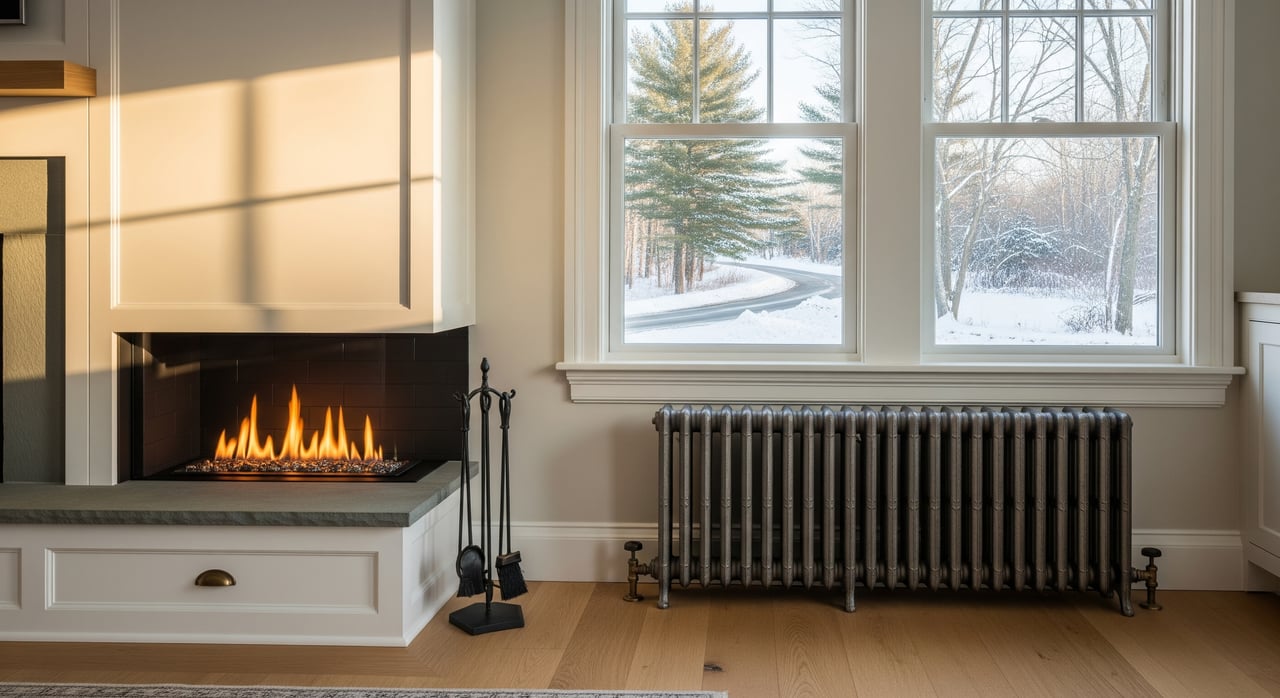
- Hydronic baseboard or radiant floors use hot water from a boiler. If you keep hydronics, you can change the heat source more easily than the distribution type. Some hydronic heat pump options exist, but many air-source units require ductwork.
- Forced air uses ductwork with a furnace. Those ducts can work with an air-source heat pump, and ductless heads can serve areas without ducts.
- Electric baseboards are simple but often expensive to run long term. Many owners replace or supplement with heat pumps.
Switching from hydronic to forced air or vice versa can be invasive and costly. Before you plan a conversion, consider improving the building envelope first. Insulation and air sealing reduce the size of the system you need and improve heat pump performance.
What to ask at showings
Use this checklist when you tour Bow homes:
- What type of system is installed and how old is it? Ask for the make, model, and any manuals.
- Who owns the tank for oil or propane? If leased, what are the transfer terms and fees?
- Is the oil tank above ground or underground? If underground, request inspection or removal documentation.
- Can the seller provide 12 to 24 months of actual heating bills? Look for gallons, therms, or kWh to gauge real usage.
- Are there service records for annual tune-ups and repairs?
- Is there a secondary heat source such as a pellet stove or electric backup?
- For heat pumps: are they cold-climate models, how many zones do they cover, and do they heat the full house?
- Any known issues like past leaks, chimney problems, uneven heat, or frozen pipes?
- Have there been recent insulation, window, or air sealing upgrades?
- If you want to convert, are there physical constraints for equipment placement or a nearby gas main?
Documents to request
- Fuel usage and invoices for the last 12 to 24 months.
- Service and inspection records for boilers, furnaces, heat pumps, chimneys, and tanks.
- Tank paperwork, including installation date, corrosion inspections, and any removal or abandonment reports.
- Permits for heating work from the Bow building department or Merrimack County records.
- Warranties and manufacturer documentation for current equipment.
Red flags to notice
- Strong oil or kerosene smell near the tank or in the basement.
- Visible corrosion on above-ground tanks or staining near the tank area.
- Excessive soot or creosote around a wood stove or chimney.
- Lack of annual maintenance records for older combustion systems.
- Outdoor heat pump unit blocked by snow or landscaping, or a unit that appears undersized for the home.
Local steps and resources
In Bow, start with the town office or building department to confirm permits and past work related to heating equipment. For underground tank rules, leak reporting, or cleanup guidance, contact the New Hampshire Department of Environmental Services. If you are exploring heat pumps or insulation incentives, check the New Hampshire state energy office for current programs and federal guidance. For broader context on fuel prices and equipment performance, consult the U.S. Energy Information Administration, the U.S. Department of Energy, the Northeast Energy Efficiency Partnerships for cold-climate heat pump resources, and the U.S. Environmental Protection Agency for certified wood heater information.
Ready to weigh your options for a specific property? We can help you compare systems, request the right documents, and plan upgrades that match your lifestyle and long-term budget.
Looking at homes in Bow or greater Concord and want a clear plan for heating comfort and cost? Schedule a consult with Allison Driscoll to review system pros and cons, usage history, and smart upgrade paths.
FAQs
How well do heat pumps work in Bow winters?
- Cold-climate air-source models are designed to perform efficiently at low temperatures common in New Hampshire, though some homes use supplemental heat during the coldest spikes.
What if a Bow home has an underground oil tank?
- Request documentation of inspections, tests, or removal. Contact New Hampshire Department of Environmental Services for guidance on rules, risk, and any reporting requirements.
Is natural gas available at all Bow addresses?
- No. Service is geographically limited. Verify availability for a specific property through local utilities or the town office before planning a gas conversion.
How can I estimate heating costs for a home?
- Ask for 12 to 24 months of actual fuel usage and bills. Reviewing gallons, therms, or kWh is more reliable than assuming cost based on fuel type alone.
What maintenance should I expect with oil or propane?
- Plan on annual professional service for burners or furnaces, filter changes, and vent or chimney checks. Keep carbon monoxide detectors in working order.
Are pellet or wood stoves good as a primary heat source?
- They can be primary or supplemental, but require hands-on fueling and regular cleaning. Choose EPA-certified appliances and plan for annual chimney or vent inspections.